
The morning light in Rishikesh seems to be very gentle - it is the golden rays that filter through the mist, and the air is full of the smell of fresh herbs and temple incense. The Ganges is very quiet and gentle; it seems that it is whispering a blessing. You take a deep breath and you feel that it is your first time in months that your body is ready to exhale.
Welcome to Panchakarma - Ayurveda’s sacred process of renewal.
The detox at Haritha Yogshala is not a short-term solution or a quick fix. It is a journey to remember one’s balance, to take off the layers of tiredness and inner noise until you are left with only stillness. Each day is like a slow rhythm, where any herbal tea you drink and the clean air of the Himalayas you breathe become your healing.
We can take a look at what is performed in this old ritual one day at a time.
You come in, tired but still carrying a bit of hope. Haritha Yogshala's peaceful space, the best Panchakarma retreat in Rishikesh, sees you off to a different world. A cup of spiced herbal tea along with warm smiles and gentle voices welcome you.
An Ayurvedic doctor, trained through an Ayurveda therapy course, who listens - really listens - to your story, is your first meeting. By pulse reading and talking they get to know your Prakriti (natural constitution) and Vikriti (current imbalance).
Your treatment will be a unique one - it is going to be a plan to restore your doshas by food, rest and touch. The first night is kept very basic: a light meal, early sleep and the feeling of giving oneself to a slower rhythm.
Early in the morning, the birds' songs blend with the ringing of temple bells. The mountains are covered with a thin layer of fog. You move on with your Snehana, internal and external oleation.
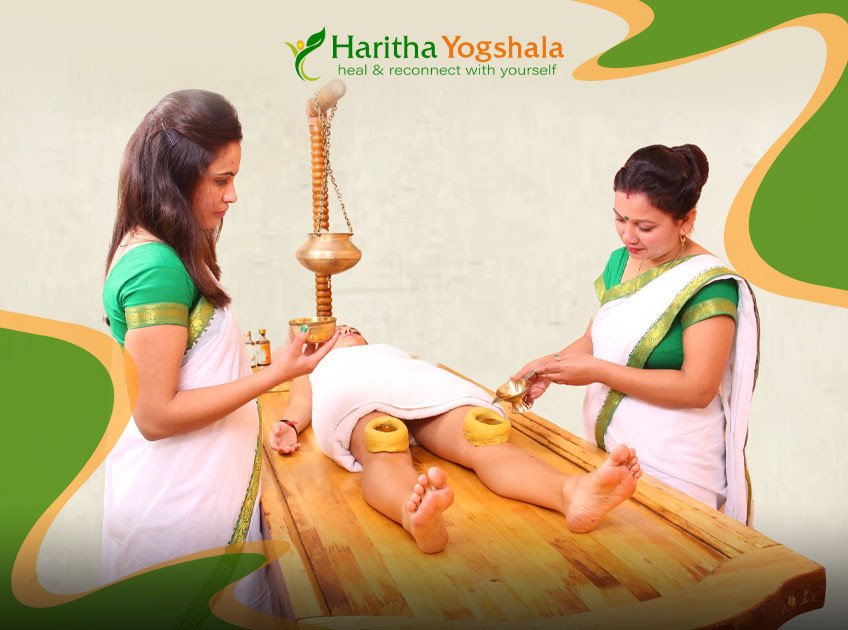
Every morning, a small quantity of medicated ghee is used - the golden elixir that starts to loosen toxins from deep inside the tissues. After that, a warm oil massage is brushed upon your body. Two therapists working in tandem, their hands flowing in long rhythmic strokes which deeply relax the body.
The oils are heated, scented with herbs, and the ritual is nearly a devotional one. Your skin becomes radiant, your breath steadies, and a calm awareness starts to replace the agitation with which you came.
This is Ayurveda’s method of getting you ready - the body is very gently being opened for the healing to come.
On the third day, a change is visible to your body. The oils have gone deep into the skin - now it is necessary to sweat out the impure substances.
Swedana, or the herbal steam bath, is a room flooded with the pleasant and earthy smell of tulsi, neem, and sandalwood. As the heat gets to you, sweat starts slowly, and therefore, along with it, tension disappears.
The body is lighter. The brain is slower.
In the afternoon, gentle yoga and Ayurveda and Yoga integration exercises help to calm down the energy that has been excited. The meals are warm and light - lentil soups, herbal teas, and rice porridge are foods that are truly nourishing.
By night time, a profound tranquility takes over.
This is the day your inner cleansing commences. As per the instructions of your Ayurvedic practitioner, you undergo one or more of the five therapies, which are the source of the name Panchakarma - the "five actions."
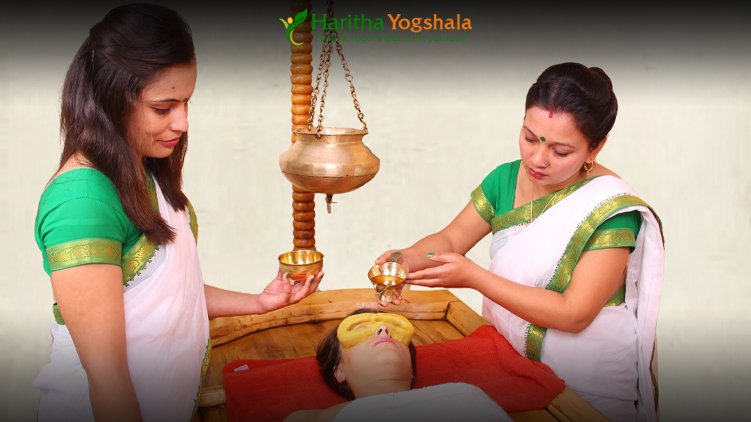
It could be Virechana for a person, a mild herbal purge that detoxifies the digestive tract and liver. Another person might require Basti, a warm medicated enema that calms and feeds the colon. Every treatment is personalized, intentional, and of utmost importance.
There is no hurry, no pain - just the quiet awareness that your system is letting go of something old.
After the treatment, you relax in silence. Even the air seems to be still, as if nature is providing a space for your change.
The next day, you still feel somewhat different, as if you were lighter, cleaner, and softer. It is the body that brought the stress and tension, but now it feels empty yet full of life.
The focus is on rejuvenation today, which is Rasayana. Therapists are applying drugs that are loaded with the herbs like ashwagandha and shatavari. Gentle yoga stretches help you to move again.
The food you eat is even better, and your digestion is very easy. The whole bite is delicious because the senses are renewed.
Students going through short-term Ayurveda courses in India, frequently associate this stage with the “return of vitality.” It is the point when strength, stability, and radiance become visible again.
At this point, your body is spotless, and your mind becomes a reflection of that purity.
You keep more of your time for meditation, which is a guidance given by teachers, who assist you in being aware. Your breathing becomes longer and more relaxed without any effort; thoughts come and go like temporary clouds. Ayurveda calls it Sattva - the attribute of being pure, harmonious, and having a gentle nature.
When it is very quiet, you start to feel gratitude - not only for the therapies and the place but also for the body that has been with you all the time, it has gone through the different seasons of your disorder patiently.
After a while, you see that healing is not an act of mending. It is an act of recalling.
At this point, your body is spotless, and your mind becomes a reflection of that purity.
You keep more of your time for meditation, which is a guidance given by teachers, who assist you in being aware. Your breathing becomes longer and more relaxed without any effort; thoughts come and go like temporary clouds. Ayurveda calls it Sattva - the attribute of being pure, harmonious, and having a gentle nature.
When it is very quiet, you start to feel gratitude - not only for the therapies and the place but also for the body that has been with you all the time, it has gone through the different seasons of your disorder patiently.
After a while, you see that healing is not an act of mending. It is an act of recalling.
At this moment your body is hygienic, and your mind becomes the image of that cleanliness.
You spend more time meditating, which is a help given by teachers, who make you aware. Your breathing becomes longer and more calm without any effort; thoughts are there and not like temporary clouds. Ayurveda calls it Sattva - the attribute of being pure, harmonious, and having a gentle nature.
When it is very quiet, you start to feel thankfulness - not only for the therapies and the place but also for the body that has been with you all the time, it has gone through the different seasons of your disorder patiently.
After some time, you realize that healing is not an act of mending. It is an act of recalling.